Weekly Catalogue: September 23, 2025
By Lexi moorehead

“Natural,” “All-Natural,” or 100% Natural
Basically means nothing. This term is not legally defined by the United States Food and Drug Administration. However, the FDA has historically considered “natural” to mean nothing artificial or synthetic has been included in the food.
Source: United States Food and Drug Administration
USDA Organic Seal
Organic product labels must be reviewed and approved by a USDA-accredited certifying agent before being used in the marketplace.
Certified organic products must be produced “using agricultural production practices that foster resource cycling, promote ecological balance, maintain and improve soil and water quality, minimize the use of synthetic materials, and conserve biodiversity.”
Products certified must be:
- Overseen by a USDA National Organic Program (NOP) authorized certifying agent;
- Produced without excluded or prohibited methods, (e.g., genetic engineering, ionizing radiation, or sewage sludge); and
- Produced using allowed substances.
There are three subcategories of “organic” products:
“100 Percent Organic”
Any product that contains 100% organic ingredients (excluding salt and water, which are considered natural). “Most raw, unprocessed or minimally processed farm crops can be labeled ‘100 percent organic’”
“Organic”
Any product with a minimum of 95% organic ingredients.
These products’ ingredients may contain up to 5% nonorganic agricultural products and/or nonagricultural products on the National List.
“Made with Organic”
These products may not: use the USDA organic seal; state that the finished product is “organic”; or or state “made with organic ingredients.” Instead, they may label the product as “made with organic (insert up to three ingredients or ingredient categories)”
These products contain at least 70% organically produced ingredients, with a number of detailed constraints regarding ingredients that comprise the nonorganic portion.
Source: Labeling Organic Products, USDA
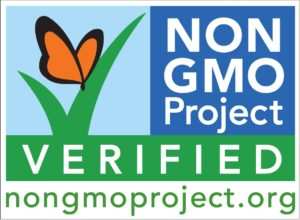
Products that receive the USDA Organic certification are supposed to exclude GMOs. However, the USDA National Organic Program does not require testing for GMOs. Producers may apply for a separate certification–such as the Non GMO Project–to show their product has been tested for GMOs.
See the below section, Non-GMO Project Verified, for more info on the butterfly label.
Non-GMO Project Verified
Producers may apply to organizations, like the Non-GMO Project, to have their products certified by their rigorous standards. Now, does the Non-GMO Project verified seal mean a product is 100% guaranteed “GMO free”? No. That is impossible (sadly). According to the Non-GMO Project:
“GMO free” and similar claims are not legally or scientifically defensible. The risk of contamination to seeds, crops, ingredients and products is too high to reliably claim that a product is “GMO free.” The “Non-GMO Project Verified” label offers a clear and truthful statement acknowledging the risk of contamination and the realities of the current food system, and assures shoppers that the Verified product meets the Project’s rigorous Standard. While the Non-GMO Project Verified seal is not a “GMO free” claim, it is trustworthy, defensible and transparent. That’s why the Butterfly is North America’s only third-party verification for products made according to best practices for GMO avoidance.
Read more about the Non-GMO Project’s Current Standards here!
Source: Non-GMO Project
Why Buy Organic?
Buying organic products limits potential concerns when compared to non-organic products. For example, certain fruits and vegetables have higher concentrations of residual chemical residue (i.e., pesticides). Thus, consuming non-organic produce may mean consuming higher concentrations of harmful chemicals.
Every year, the Environmental Working Group (EWG) releases its “dirty dozen” and “clean fifteen” lists to help consumers identify which produce they may be better off buying “organic.”
EWG recommends consumers who want to reduce their pesticide exposure purchase organic versions of Dirty Dozen items. The 2025 Dirty Dozen™ list includes:
- Spinach
- Strawberries
- Kale, collard, and mustard greens
- Grapes
- Peaches
- Cherries
- Nectarines
- Pears
- Apples
- Blackberries
- Blueberries
- Potatoes
Further Reading:
Is the Organic Label as Valuable as You Thought? by Hunter College New York City Food Policy Center
Want more related content? Let us know!
Thank you for reading! If you want to get in touch, you can reach us on Instagram or here on our contact page.

 Hotel Earth 360°